Component Directors: Mallie J. Paschall, Ph.D. and Joel W. Grube, Ph.D.
A growing number of states have legalized marijuana for medical and recreational use, which may increase the likelihood of concurrent or simultaneous use (co-use) with alcohol.
Given the substantial variation in how alcohol and marijuana policies are implemented and enforced at the local level, and the rapidly changing marijuana policy environment, this is a serious gap in our knowledge of how to effectively regulate these substances to minimize problems. Moreover, little is known about how young people adapt to local regulatory policies and enforcement activities that place constraints on availability and opportunities for using alcohol and marijuana and risks associated with such adaptations. Alcohol and drug policies and enforcement may also have differential effects across gender, sexual, and racial/ethnic groups, potentially contributing to health disparities.
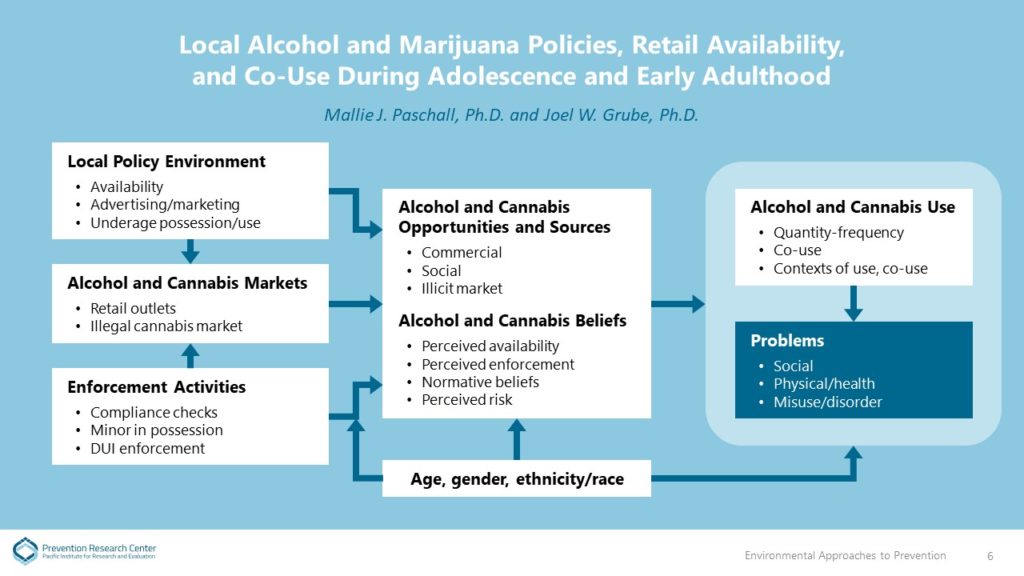
As illustrated in the figure, this research component will investigate effects of the local alcohol and marijuana policy environment, alcohol and cannabis markets, and enforcement activities on opportunities for alcohol and marijuana use and co-use, and beliefs related to alcohol and cannabis use, in a prospective cohort of 15 to 20-year-olds. The research focuses not only on the overall policy environment, but on specific policy domains, including policies that affect availability, advertising/marketing, and underage possession and use of alcohol and cannabis. Also of interest: the illegal cannabis market, since there are illegal cannabis stores operating in many cities, in addition to the illegal street market.
Research Plan
To address these issues, we will conduct a five-year study to investigate whether more restrictive evidence-based local policies and stronger enforcement reduce alcohol and marijuana availability and opportunities for use, and prevent alcohol and marijuana use, co-use, and related problems during adolescence and in early adulthood. The study will be conducted in 40 California cities that vary in alcohol and marijuana regulatory policies and retail availability. We will monitor changes in marijuana and alcohol policies, enforcement activities, and marijuana and alcohol retail availability over a three-year period. We will conduct a three-wave longitudinal survey with a cohort of 15 to 20-year-olds recruited in the 40 cities to assess their alcohol and marijuana use and co-use in different contexts, related problems, sources and types of marijuana and alcohol used, and related beliefs. This study will (a) determine whether more restrictive local regulatory policies and enforcement activities delay initiation of alcohol and marijuana use and co-use and prevent escalation of these behaviors and problems over time; (b) ascertain the extent to which such effects are mediated through availability (social, commercial, and illicit), opportunities and constraints for alcohol and marijuana use, and related beliefs; (c) provide guidance to policymakers and public health stakeholders at local levels; and (d) inform future research on local alcohol and marijuana alcohol policies and mechanisms through which they may affect alcohol and marijuana use. We will also explore the extent to which race/ethnicity, sex, and gender moderate effects of policy and enforcement.
